
Practicing Slowly: The Most Direct Path to Speed
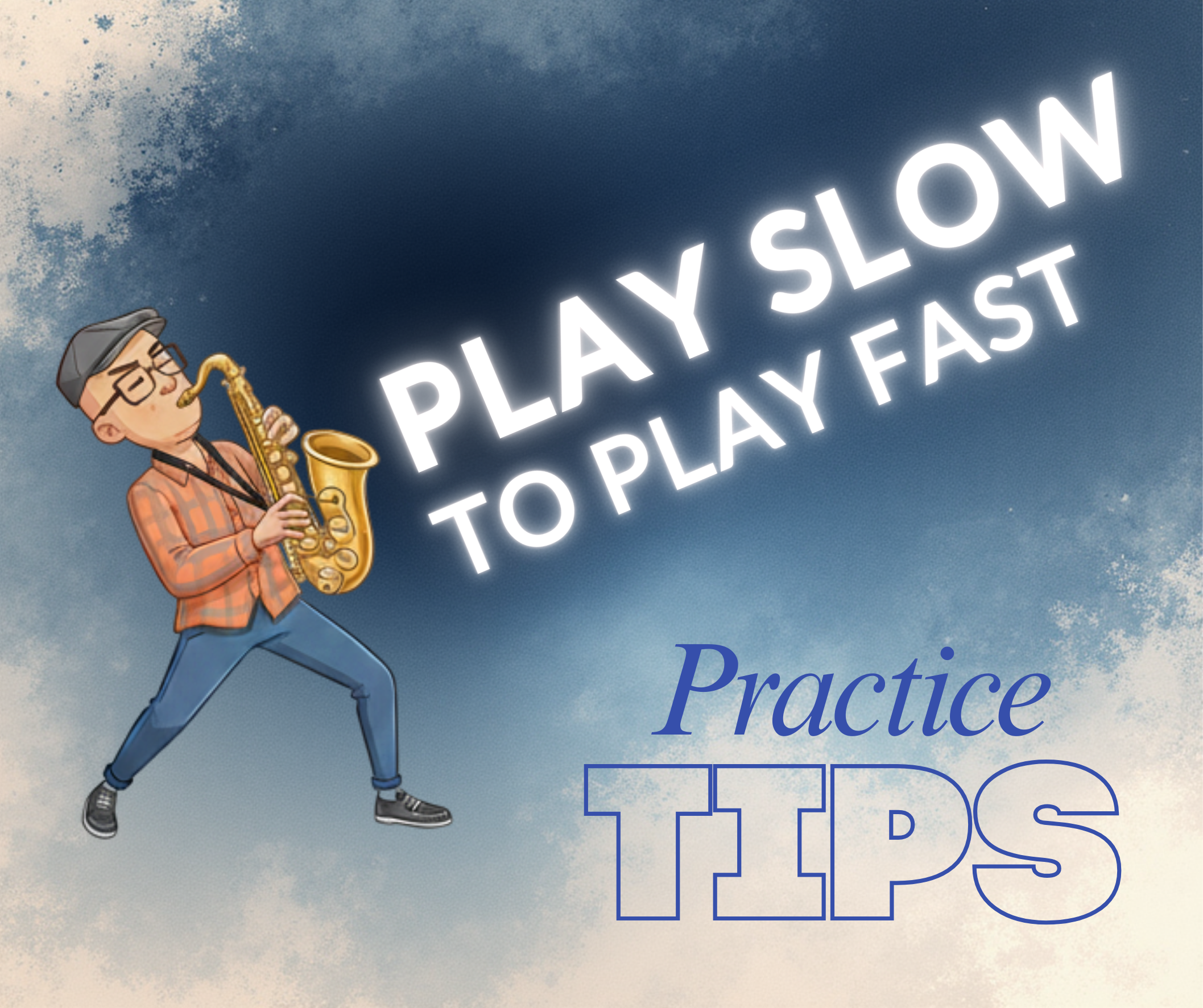
Every player wants to play faster. But speed isn’t something you chase. Speed is something that appears when the foundation is solid.
The foundation comes from practicing slowly. Not “sort of slow.” Actually slow. As in 60 BPM slow.
Saxophonist Bob Reynolds calls 60 BPM his “truth serum.” At that tempo, nothing hides. Your fingers, your air, your tone, your time feel… all of it is exposed. The metronome becomes a mirror.
Why Slow Practice Works
1. It Removes Illusion
Fast practice creates the illusion of control. Slow practice exposes reality.
As Marcus Aurelius wrote: If it is endurable, then endure it.
Slow work forces you to face imperfections long enough to fix them.
2. It Builds Consistent Muscle Memory
Speed is a side effect of consistency. At slow tempos, your fingers learn exact movements. Precision turns into habit. Habit turns into speed.
3. It Strengthens Time Feel
At slower speeds, you feel the space between beats. You hear subdivisions. You learn to breathe within the pulse rather than disrupt it.
4. It Gives You Control, Not Chaos
Anyone can “almost” play something fast. Professionals control every note.
Slow practice is control training. Speed magnifies whatever is already there.
How to Practice Slowly the Right Way
1. Set the metronome to 60 BPM. No negotiating.
2. Work on a small chunk
One scale, one lick, one bar.
3. Stay relaxed
Tension at slow tempos = tension at all tempos.
4. Demand clean tone and clean releases
5. Only increase tempo after you play the line mistake-free three times in a row
The Real Benefit: Patience
Slow practice doesn’t just sharpen technique. It sharpens character.
It teaches discipline. It reduces ego. It rewards honesty. It’s musical stoicism.
Seneca said: It’s not that we have a short time to live, but that we waste much of it.
Fast practice before you're ready is wasted time.
Slow practice is invested time.
Speed is the result of clarity.
Clarity is earned by practicing slowly.
References
Bob Reynolds, “Practice Journal” (YouTube series)
Kenny Werner, Effortless Mastery
Hal Crook, How to Improvise
Marcus Aurelius, Meditations
Ready for lessons? - Lesson Information